
/ 4
Lovibond Turbidimeter Series: TB 300 IR (Benchtop), TB 211 IR (USB Portable) & TB 250 WL (EPA 180.1)
High-precision laboratory and portable turbidimeter series offering infrared optics (EN ISO 7027) immune to sample color and white light optics (EPA 180.1), supported by long-term stable T-Cal Formazine standards.
Technical Specifications
| Available Models | TB 300 IR (Benchtop/RS232), TB 211 IR (Handheld/USB), TB 250 WL (EPA 180.1) |
|---|---|
| Measurement Range | 0.01 – 1,100 NTU / FNU (Automatic Range Detection) |
| Regulatory Compliance | EN ISO 7027 (TB 300 IR & TB 211 IR) / US EPA Standard 180.1 (TB 250 WL) |
| Light Source | IR-LED 860 nm (TB 300 & 211) / White Light Tungsten Lamp (TB 250 WL) |
| Measurement Resolution | 0,01 NTU (0,01–9,99 NTU) / 0,1 NTU (10–99,9 NTU) / 1 NTU (100–1100 NTU) |
| Accuracy | ± 2% reading or 0.01 NTU (0–500 NTU); ± 5% reading (500–1100 NTU) |
| Data Memory Capacity | 1,000 datasets (TB 300 IR) / 125 datasets (TB 211 IR) |
| Data Interface | RS232 Serial (TB 300 IR) / Micro-USB (TB 211 IR) |
Full Product Description
Turbidity measurement is a vital water quality index across municipal water treatment, environmental surveillance, and industrial process monitoring. The Lovibond® Turbidimeter Series offers dedicated instruments adhering to both major international standards: EN ISO 7027 (infrared 860 nm nephelometry) and US EPA 180.1 (tungsten white light nephelometry), covering a dynamic analytical range from 0.01 to 1,100 NTU.
Comprehensive Model Breakdown within the Series:
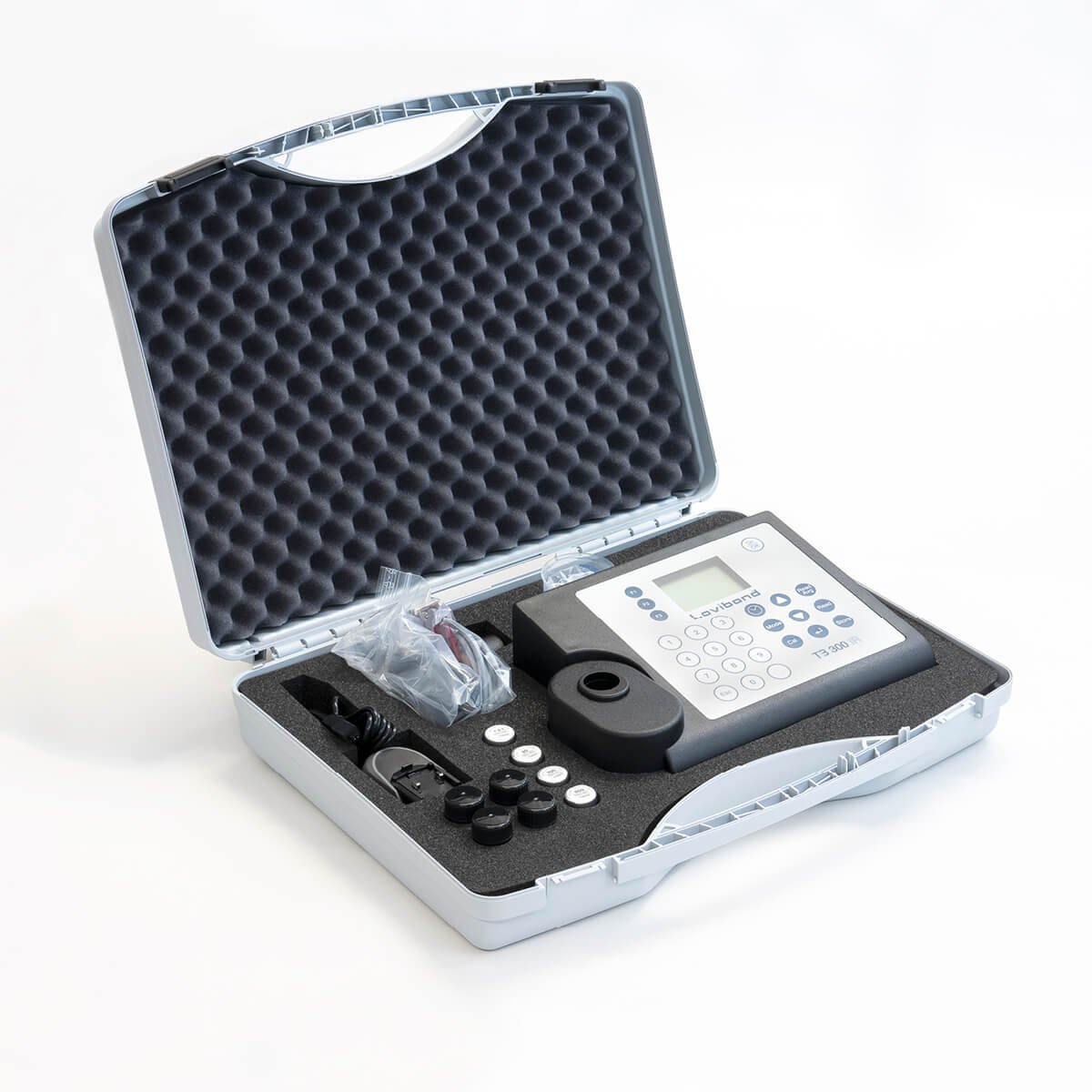
1. Lovibond TB 300 IR - Laboratory & Field Benchtop Turbidimeter (Page 18):
• Standard Compliance: EN ISO 7027 nephelometric 90° scattered light detection.
• Optical Engine: Infrared LED (860 nm) completely eliminates sample color interferences, ensuring identical precision in colored effluents and sparkling drinking water.
• Auto-Ranging Capability: 0.01 to 1,100 NTU (Accuracy: ± 2% of reading up to 500 NTU; ± 5% thereafter).
• Data Management: Generous internal memory storing up to 1,000 datasets with real-time clock. Equipped with an RS232 serial interface for PC and lab printer integration.
• Power Architecture: 7 NiCd rechargeable AA batteries, universal mains adapter (100–230V), and internal lithium memory backup. Dimensions: 265 x 195 x 70 mm (Net weight ~1,000 g).
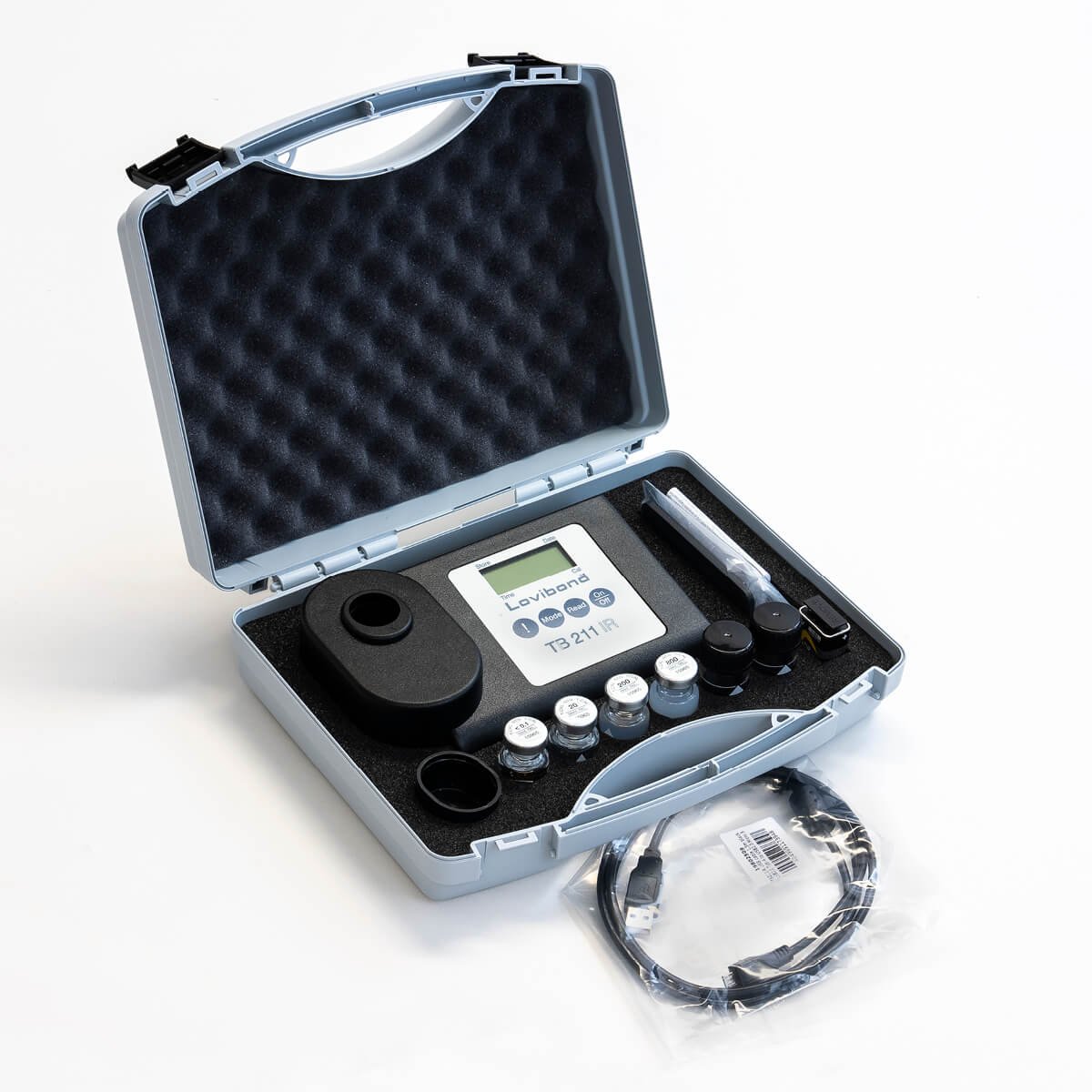
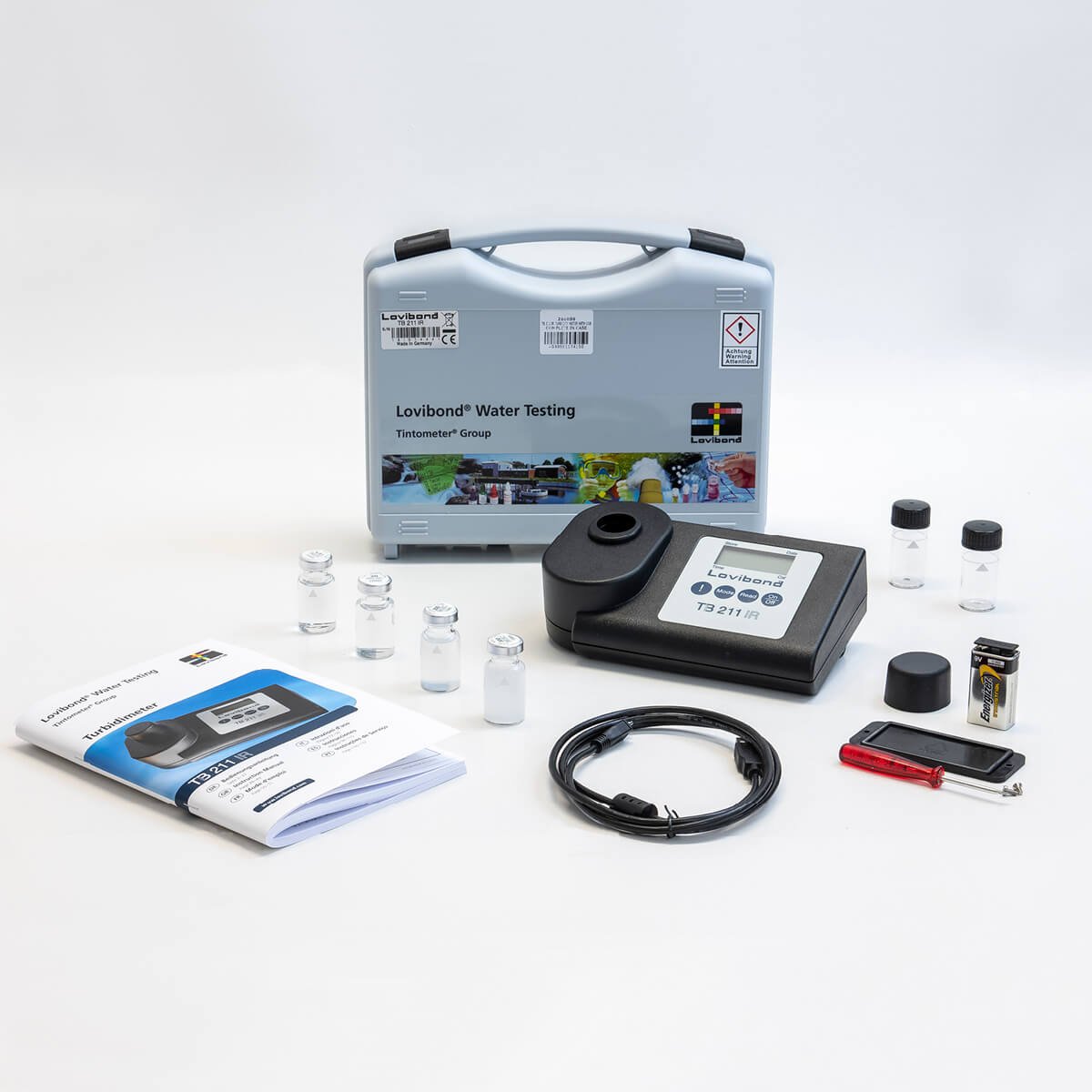
2. Lovibond TB 211 IR - Compact Handheld Turbidimeter with Micro-USB (Page 19):
• Standard Compliance: EN ISO 7027 infrared light source (860 nm) with 90° detector.
• Ultra-Portable Footprint: Compact housing (190 x 110 x 55 mm, weight ~400 g) engineered for on-site field testing.
• Rapid 8-Second Measurement Cycle: Yields stable, auto-ranged readings in approximately 8 seconds on an illuminated backlit LCD.
• Modern Micro-USB Connectivity: Direct export of 125 stored measurement logs to computer environments (standard USB cable included).
• Power: Powered by a single 9V block battery with auto-off battery conservation.
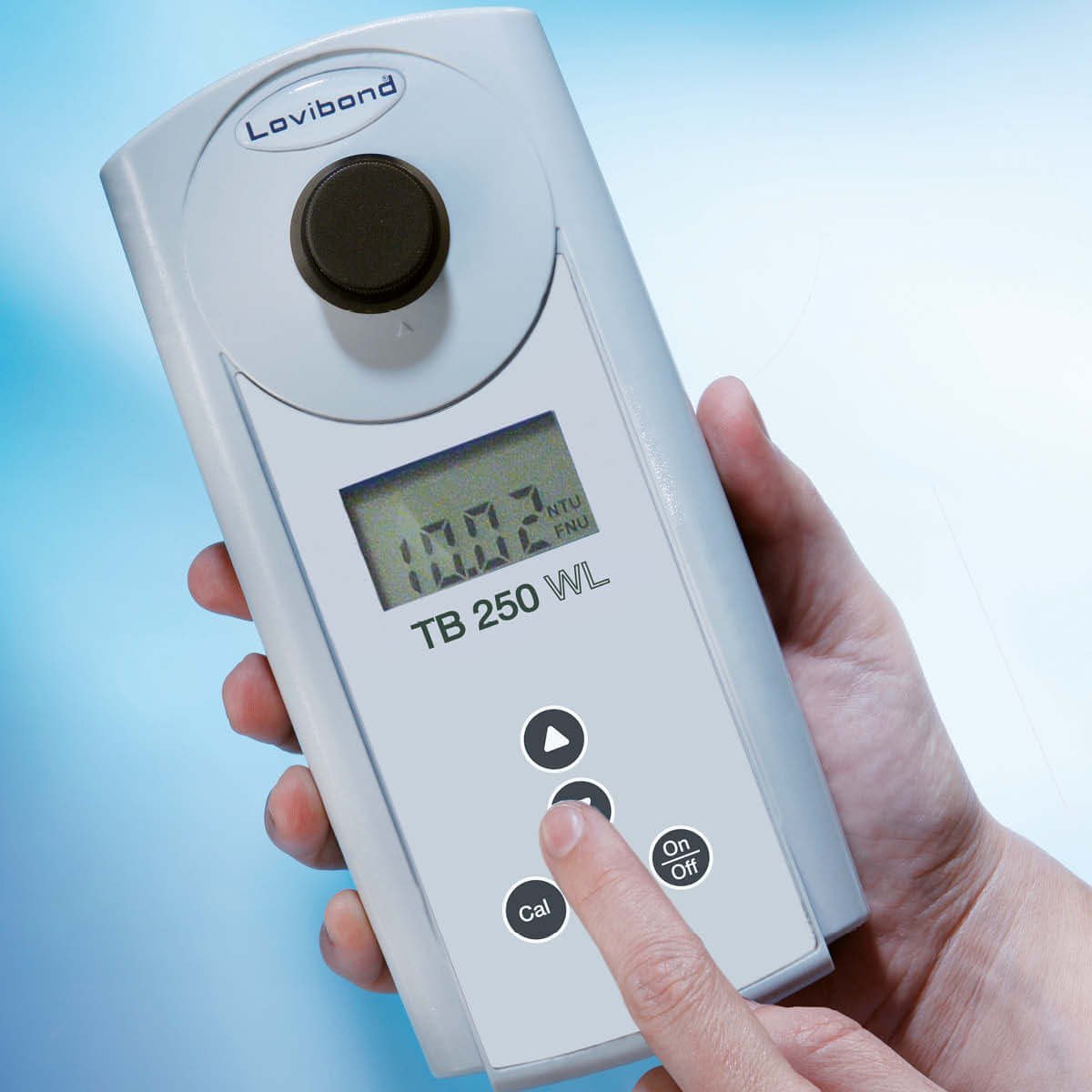
3. Lovibond TB 250 WL - White Light Portable Turbidimeter (US EPA 180.1) (Page 20):
• Standard Compliance: US EPA Standard 180.1 compliant for drinking water regulatory audits.
• Optical Engine: High-precision white light source with 90° scattered light detector.
• Energy-Efficient Microcircuit: Yields over 5,000 measurements on 4 x AA alkaline batteries with an estimated bulb service life of 7 to 10 years.
• Turnkey Delivery Package: Includes TB 250 WL instrument, sample cuvettes, 4 x AA batteries, carrying case, and secondary calibration standards set (0.02, 10, 1000 NTU [Code: 194280]) (Complete Order Code: 194200).
T-Cal Formazine Primary Calibration Standards:
Lovibond infrared instruments utilize stabilized T-Cal Formazine primary standards with a certified 12-month shelf life, eliminating the health hazards and inaccuracies of manual toxic hydrazine-hexamethylenetetramine dilutions.
Comprehensive Model Breakdown within the Series:
1. Lovibond TB 300 IR - Laboratory & Field Benchtop Turbidimeter (Page 18):
• Standard Compliance: EN ISO 7027 nephelometric 90° scattered light detection.
• Optical Engine: Infrared LED (860 nm) completely eliminates sample color interferences, ensuring identical precision in colored effluents and sparkling drinking water.
• Auto-Ranging Capability: 0.01 to 1,100 NTU (Accuracy: ± 2% of reading up to 500 NTU; ± 5% thereafter).
• Data Management: Generous internal memory storing up to 1,000 datasets with real-time clock. Equipped with an RS232 serial interface for PC and lab printer integration.
• Power Architecture: 7 NiCd rechargeable AA batteries, universal mains adapter (100–230V), and internal lithium memory backup. Dimensions: 265 x 195 x 70 mm (Net weight ~1,000 g).
2. Lovibond TB 211 IR - Compact Handheld Turbidimeter with Micro-USB (Page 19):
• Standard Compliance: EN ISO 7027 infrared light source (860 nm) with 90° detector.
• Ultra-Portable Footprint: Compact housing (190 x 110 x 55 mm, weight ~400 g) engineered for on-site field testing.
• Rapid 8-Second Measurement Cycle: Yields stable, auto-ranged readings in approximately 8 seconds on an illuminated backlit LCD.
• Modern Micro-USB Connectivity: Direct export of 125 stored measurement logs to computer environments (standard USB cable included).
• Power: Powered by a single 9V block battery with auto-off battery conservation.
3. Lovibond TB 250 WL - White Light Portable Turbidimeter (US EPA 180.1) (Page 20):
• Standard Compliance: US EPA Standard 180.1 compliant for drinking water regulatory audits.
• Optical Engine: High-precision white light source with 90° scattered light detector.
• Energy-Efficient Microcircuit: Yields over 5,000 measurements on 4 x AA alkaline batteries with an estimated bulb service life of 7 to 10 years.
• Turnkey Delivery Package: Includes TB 250 WL instrument, sample cuvettes, 4 x AA batteries, carrying case, and secondary calibration standards set (0.02, 10, 1000 NTU [Code: 194280]) (Complete Order Code: 194200).
T-Cal Formazine Primary Calibration Standards:
Lovibond infrared instruments utilize stabilized T-Cal Formazine primary standards with a certified 12-month shelf life, eliminating the health hazards and inaccuracies of manual toxic hydrazine-hexamethylenetetramine dilutions.